
Tea bag and Microplastic
Tea Bags and Microplastics: What You Need to Know
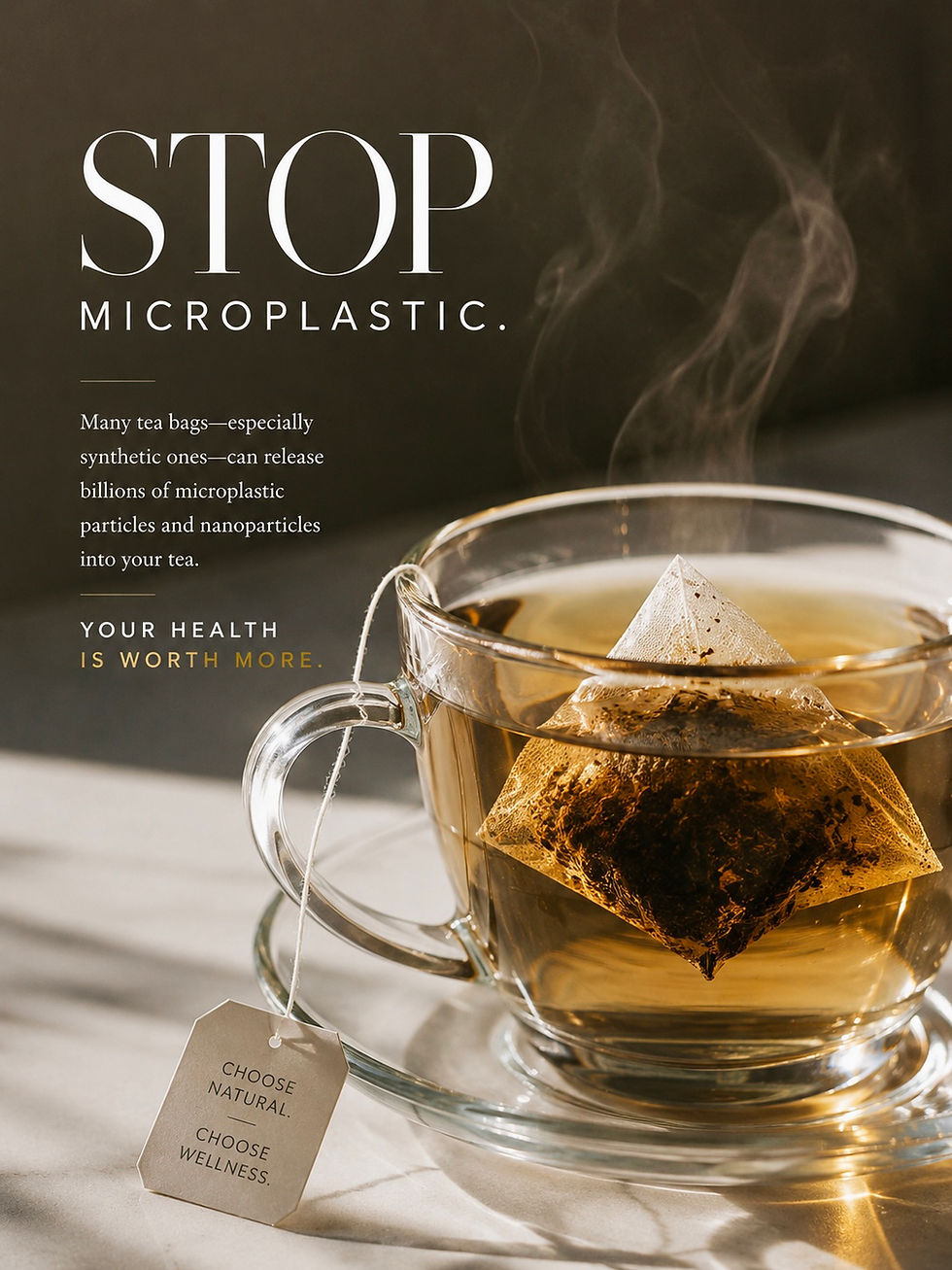
As many of you know, I am deeply passionate about wellness—not just what we place in our cups, but what we place into our bodies.
And recently, there has been increasing concern in the tea world about something many people never think about: microplastics in tea bags.
Yes, even something as soothing and healing as tea can become problematic depending on how it is packaged.
Many commercial tea bags—especially the silky pyramid-style bags—are not actually made from paper alone. Some are made with plastics such as nylon or polypropylene, materials used to help the bags hold their shape and withstand hot water.
The problem begins when boiling water is poured over these bags.
Research has shown that certain plastic tea bags can release billions of microscopic plastic particles and even smaller nanoparticles into a single cup of tea. These particles are called microplastics because they are tiny fragments of plastic that can enter the body through ingestion.
So where do these microplastics come from?
They come from:
the plastic mesh used in some tea bags,
plastic sealants used to close the bags,
and synthetic materials blended into what appears to be “paper” tea sachets.
When exposed to high heat, these materials can begin to break down.
Scientists are still studying the long-term effects of microplastics on human health, but concerns include:
inflammation,
hormone disruption,
effects on gut health,
and the accumulation of plastics in organs and tissues.
This is why I always encourage people to become conscious consumers.
Read labels.
Ask questions.
Know what your tea bag is made from.
One of the healthiest and most beautiful ways to enjoy tea is to return to the traditional practice of using high-quality loose-leaf tea with a stainless steel or ceramic infuser. Not only do you avoid unnecessary plastics, but you also experience the true flavor, aroma, and integrity of the leaf itself.
Tea should be a ritual of healing—not another hidden source of toxins.
At Desert Sage, our philosophy has always been simple:
wellness begins with intention.
And sometimes, the smallest choices—like what holds your tea—matter more than we realize.


Comments