
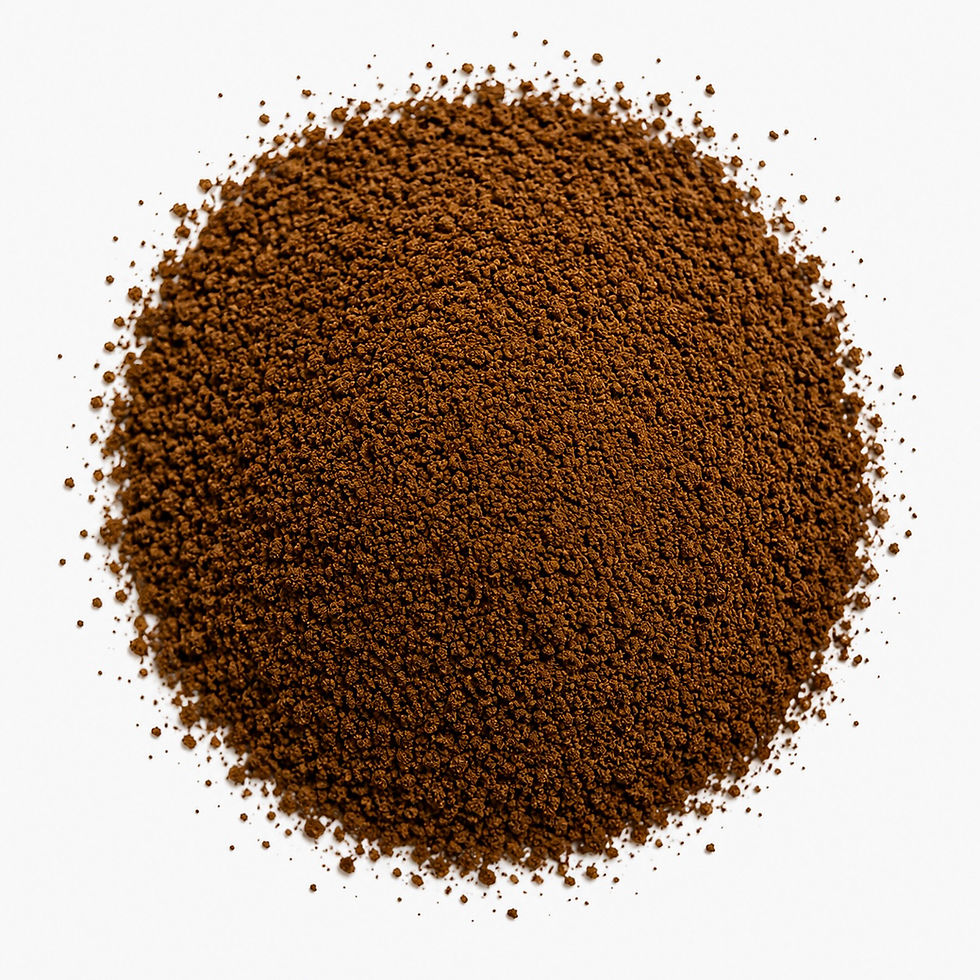
Ground Hojicha
Here’s a more expanded and historically rich version you can use for your tea readers and website:
There is a beautiful tea quietly finding its place in modern wellness culture, and yet its roots stretch deeply into the traditions of Japan. It is called Hojicha — and in its powdered form, often referred to as powdered Hojicha or “ground Hojicha,” resembling matcha in texture but offering an entirely different experience in the cup.
Hojicha was first created in Kyoto, Japan, in the 1920s. According to tea history, a Kyoto tea merchant began roasting leftover green tea leaves, stems, and twigs over charcoal to avoid waste and create something entirely new. What emerged was extraordinary: a tea with warmth, depth, sweetness, and a comforting aroma unlike the grassy brightness of traditional green tea.
The roasting process transformed the leaves from vibrant green into deep amber and chestnut tones. More importantly, it transformed the flavor. The fire softened the bitterness of the tea and brought forward rich notes of toasted nuts, caramel, wood smoke, and roasted cacao.
In many ways, Hojicha became the tea of comfort.
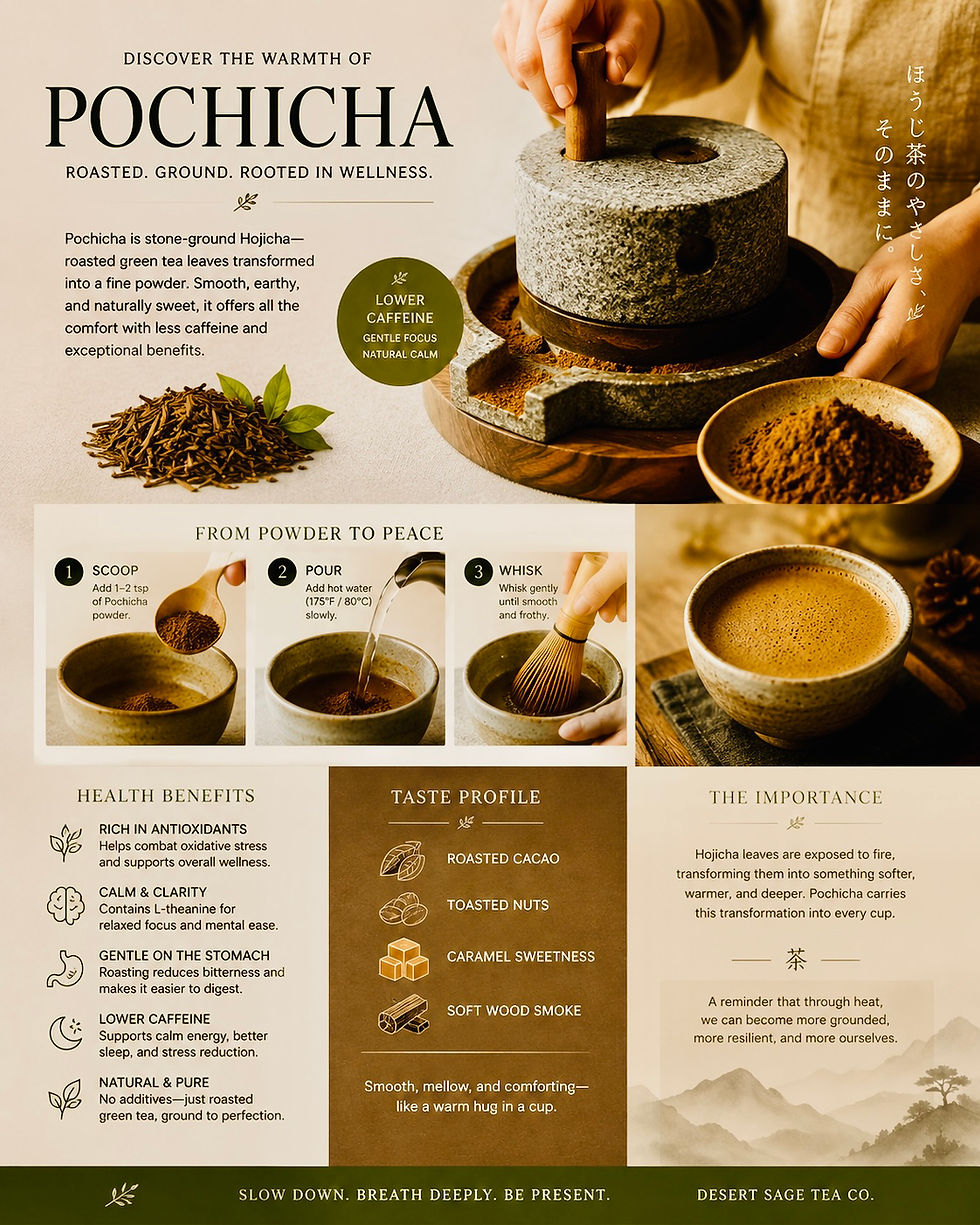
Unlike ceremonial matcha, which is bold, vegetal, and energizing, Hojicha is grounding and calming. Today, artisans in Japan have begun stone-grinding roasted Hojicha into a fine powder, much like matcha. This powdered form whisks beautifully into water or milk, creating velvety lattes, desserts, smoothies, and elegant tea beverages with remarkable complexity.
And while it may visually resemble matcha, the experience is entirely different.
The taste of powdered Hojicha is smooth, earthy, smoky, and naturally sweet. It carries a softness that many tea drinkers immediately fall in love with. There is no sharp grassy edge. Instead, it feels warm and comforting, almost like sitting beside a fireplace on a quiet evening.
One of the reasons Hojicha has become increasingly important in the wellness world is because it is naturally lower in caffeine than traditional green tea or matcha. During the roasting process, some of the caffeine content diminishes, making it ideal for evening tea rituals, people sensitive to caffeine, or anyone seeking calm focus rather than stimulation.
Yet despite its gentleness, Hojicha still offers remarkable health benefits.
Like other teas from the Camellia sinensis plant, Hojicha contains antioxidants that help combat oxidative stress and support overall wellness. It also contains L-theanine, an amino acid known for promoting relaxation and mental clarity. Many people find Hojicha easier on the stomach than stronger green teas, and its soothing qualities make it deeply appealing in today’s overstimulated world.
But perhaps the beauty of Hojicha goes beyond chemistry and health benefits.
Its story is one of transformation.
A leaf touched by fire becomes softer, warmer, sweeter, and more comforting. There is something poetic about that. Hojicha reminds us that even life’s heat — the difficult seasons, the pressure, the transformation — can deepen us and bring forth unexpected richness.
At Desert Sage, we are endlessly fascinated by teas that carry not only flavor, but philosophy. Hojicha is one of those teas. It invites us to slow down. To exhale. To embrace warmth instead of urgency.
And perhaps that is why this humble roasted tea, born nearly a century ago in Kyoto, continues to resonate around the world today.
One cup, and you understand:
sometimes the gentlest things carry the deepest wisdom.


Comments