
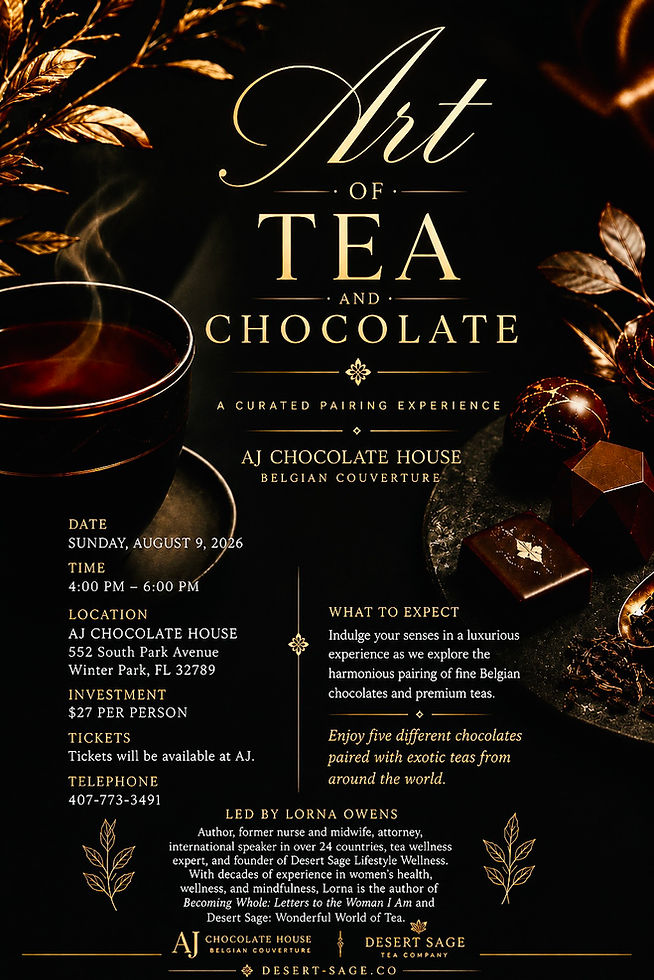
Art of Tea and Chocolate
Tea and chocolate pairing is a sophisticated sensory experience that explores the harmony between two of the world’s most treasured indulgences. Much like wine pairing, the goal is to discover how flavor, aroma, texture, and origin interact to create something extraordinary on the palate. When thoughtfully paired, fine loose-leaf teas can enhance the subtle tasting notes found in artisan chocolate — revealing floral undertones, hints of fruit, spice, earthiness, caramel, smoke, or velvety richness that might otherwise go unnoticed.
The tradition of pairing tea with chocolate has evolved from both ancient tea culture and the European art of chocolate-making. Tea has been revered for centuries in China, India, and Nepal not only as a beverage, but as ritual, hospitality, and wellness. Chocolate, once considered a sacred drink among the ancient Maya and Aztec civilizations, later became a refined luxury throughout Europe. Today, pairing the two has become an elevated culinary art embraced by tea sommeliers, chocolatiers, and luxury tasting experiences around the world.
What makes this particular experience exceptional is the use of authentic Belgian couverture chocolate alongside some of the world’s finest loose-leaf teas sourced from Nepal, Kenya, China, and India. Belgian couverture is prized for its exceptionally high cocoa butter content, giving it a silky texture, elegant sheen, and smooth melt that lingers beautifully on the tongue. Unlike ordinary chocolate, couverture is crafted specifically for gourmet tasting and allows the nuanced notes of the cocoa bean to fully emerge.
During the tasting, guests will experience how different teas interact with chocolate in surprising and luxurious ways. A delicate tea from the Himalayan mountains of Nepal may highlight floral or honey notes in the chocolate, while a bold Kenyan black tea may deepen cocoa richness and create a warm, lingering finish. Chinese teas can introduce layers of smoke, mineral, or fruit complexity, while Indian teas may offer spice, malt, or muscatel notes that beautifully complement dark chocolate.
More than simply tasting tea and chocolate, the experience becomes immersive, intentional, and deeply sensory. Guests are invited to slow down, savor each sip and bite, notice aroma and texture, and appreciate the craftsmanship behind every tea leaf and every piece of chocolate. It is a journey through culture, terroir, ritual, and indulgence — one that transforms an ordinary tasting into an elegant exploration of flavor and connection.


Comments